Nature Communications Reveals the Spatiotemporal Linkage Mechanisms of Emission-Related SDGs Among Global Cities
Atmospheric pollutants and greenhouse gas emissions have become major challenges hindering the achievement of the United Nations Sustainable Development Goals (SDGs). Against the backdrop of rapid global urbanization and industrialization, cities are both significant sources of various emissions and key actors driving green, low-carbon transitions and sustainable development. A city's performance on emission-related SDG indicators is influenced not only by local factors such as industrial structure, energy use, and environmental governance, but also profoundly shaped by interactions among cities. However, a systematic understanding of the spatiotemporal heterogeneity of these inter-city interactions remains lacking, limiting the formulation of globally coordinated emission reduction and sustainable governance strategies.
To address this gap, research teams from the Hong Kong University of Science and Technology, Hong Kong Baptist University, the University of Hong Kong, the Hong Kong Polytechnic University, Michigan State University (USA), Pusan National University (South Korea), and Monash University (Australia) systematically assessed the inter-city interactions of emission-related SDG indicators across 4,116 cities worldwide. They further constructed five interaction scenarios—including a baseline scenario, an independent governance scenario, a collaborative optimization scenario, a deep cooperation scenario, and a non-cooperative scenario—to simulate SDG performance changes under different inter-city interaction conditions. The findings have been published in the prestigious journal Nature Communications under the title "Spatiotemporal changes in inter-city sustainability impacts linked to emission challenges worldwide."
Research Background
Why Does One City's Emissions Affect Another City?
Against the backdrop of intensifying global climate change, emission reduction is no longer merely a local issue for any single country or city, but has become a core challenge for global sustainable development. Over the past few decades, global urbanization and industrialization have advanced rapidly. As core spaces for economic growth, technological innovation, and population agglomeration, cities have driven global development while simultaneously generating massive greenhouse gas and air pollutant emissions. Consequently, emission-related indicators within the UN SDGs have attracted increasing attention—for example: SDG 11.6 (PM2.5 and PM10), SDG 12.4 (SO2 and NOX), and SDG 13.2 (CO2 and CH4).
These atmospheric pollutants and greenhouse gas emissions may appear to occur "within city boundaries," but in reality, their impacts have long transcended city borders. In conventional understanding, urban emission reduction is typically viewed as a "local governance issue"—a city reduces emissions through industrial upgrading, energy transition, or environmental policies, and the benefits are primarily reaped locally. However, reality is far more complex. In the context of globalization, cities have long formed highly interconnected and interdependent network systems. Industrial chains, supply chains, capital, technology, and pollutant transport continuously cross administrative boundaries.
For example, when a city strengthens environmental regulations, highly polluting industries may migrate to regions with weaker oversight. In other words: a city's emission reduction does not necessarily mean that global emissions have truly decreased—it may simply mean "emissions have been transferred elsewhere." Similarly, when a city adopts green technology, cities upstream and downstream in its supply chain may also be compelled to upgrade accordingly.
However, a critical issue has long been overlooked: the inter-city impacts of emission reduction are not static. Relationships between different cities dynamically evolve with changes in time, industrial structure, policy, global trade, and energy systems. Cities may exhibit synergistic relationships in one year but shift to trade-off relationships the next; meanwhile, the intensity of linkages between different cities also varies significantly—some cities are closely connected, while others exhibit virtually no discernible mutual influence.
If this spatiotemporal dynamic is ignored, policymakers will find it difficult to develop precise and effective emission reduction policies and collaborative governance strategies tailored to the specific challenges that different cities face at different stages.
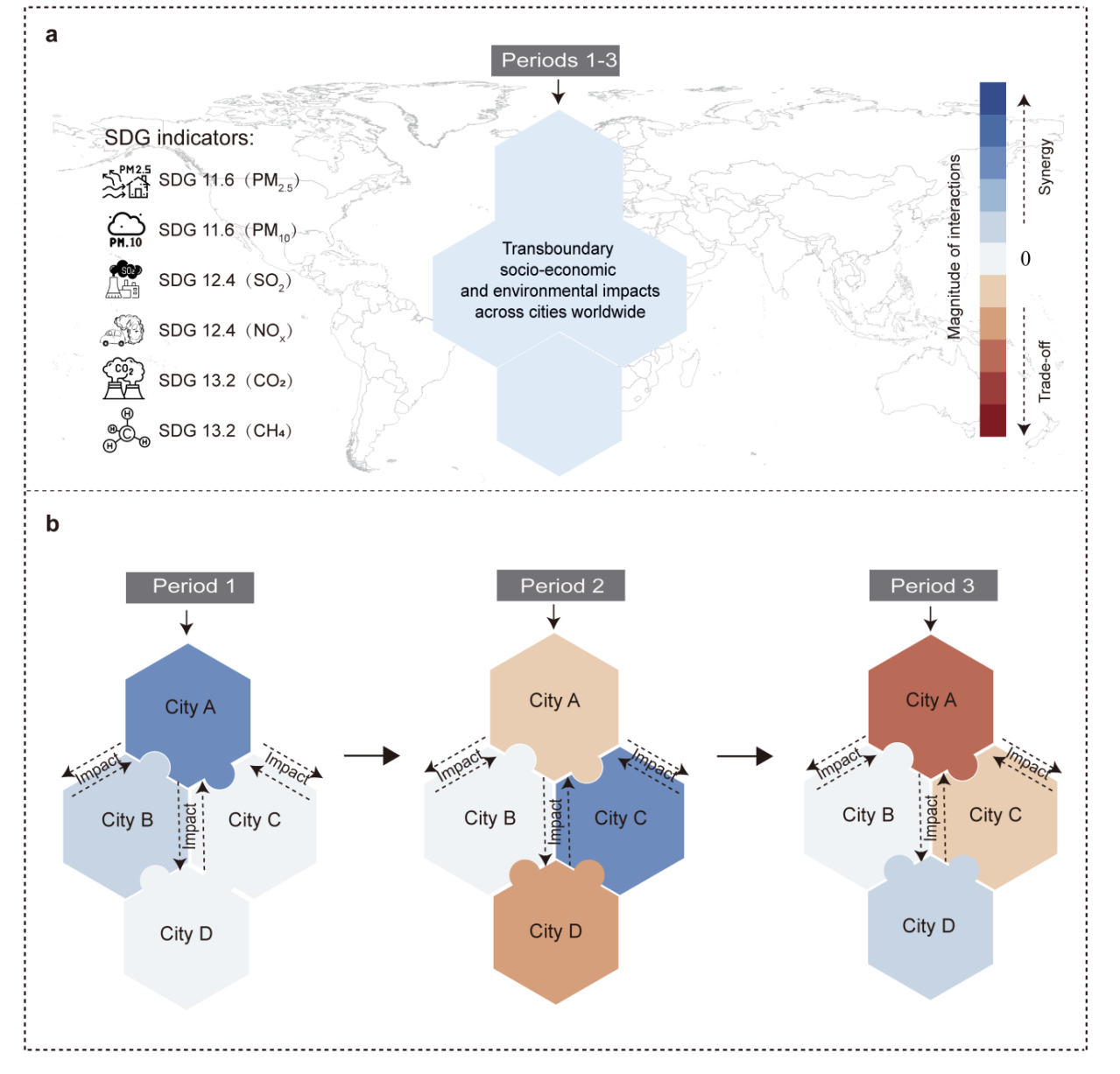
Research Content
This study examined 4,116 cities worldwide from 2010 to 2020, employing Spatial Autoregressive Models and Geographically and Temporally Weighted Autoregressive Models to systematically assess inter-city SDG interactions. It further constructed five interaction scenarios—including a baseline scenario, an independent governance scenario, a collaborative optimization scenario, a deep cooperation scenario, and a non-cooperative scenario—to simulate SDG performance changes under different inter-city interaction conditions.
Research Findings
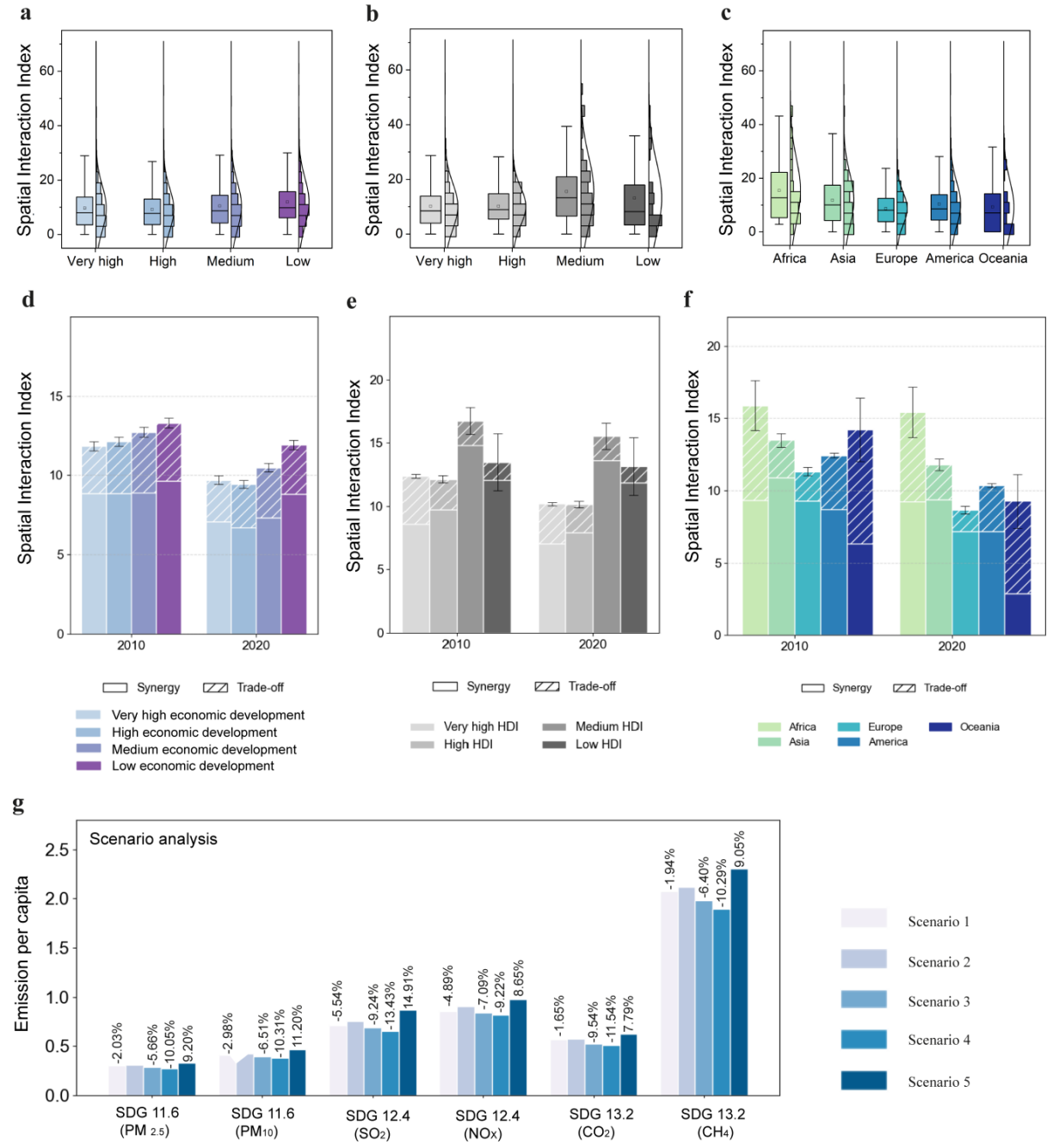
The study found that the vast majority of cities (93.51%) are significantly influenced by other cities' emission-related SDG indicators. This demonstrates that global cities still maintain extensive and complex environmental connections, and that cross-regional collaborative governance remains critically important for advancing the achievement of emission-related SDGs.
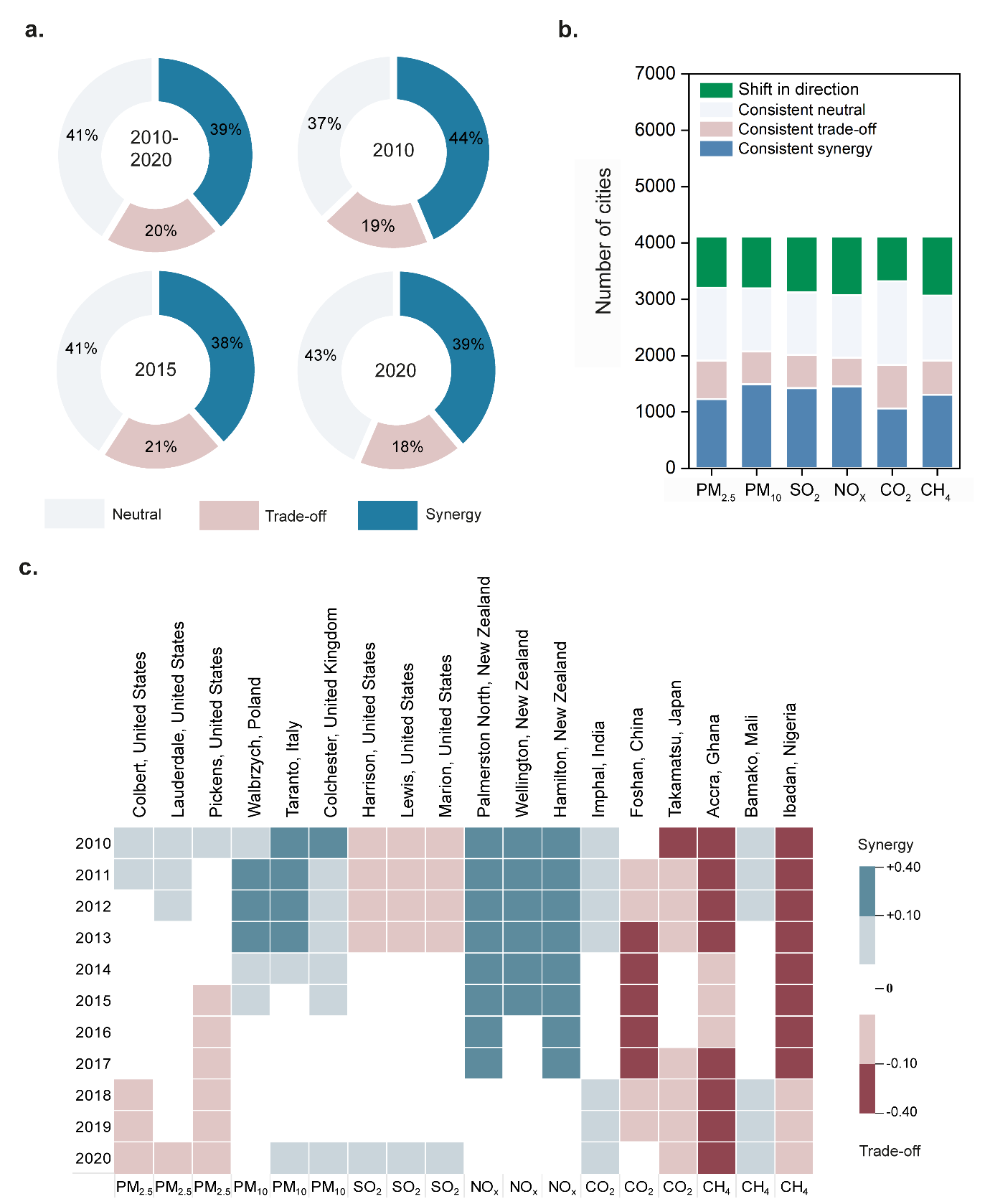
When other cities' SDG 11.6 (particulate matter pollution), SDG 12.4 (gaseous pollutants), and SDG 13.2 (greenhouse gases) indicators improve by 10%, the focal city's corresponding SDG performance can improve on average by 0.450%, 0.385%, and 0.200%, respectively. Furthermore, the number of cities experiencing inter-city synergistic effects is notably greater than those facing inter-city trade-off effects—approximately twice as many. This indicates that among the majority of global cities, emission-related SDG performance tends to exhibit mutually reinforcing synergistic relationships rather than mutually constraining trade-off relationships.
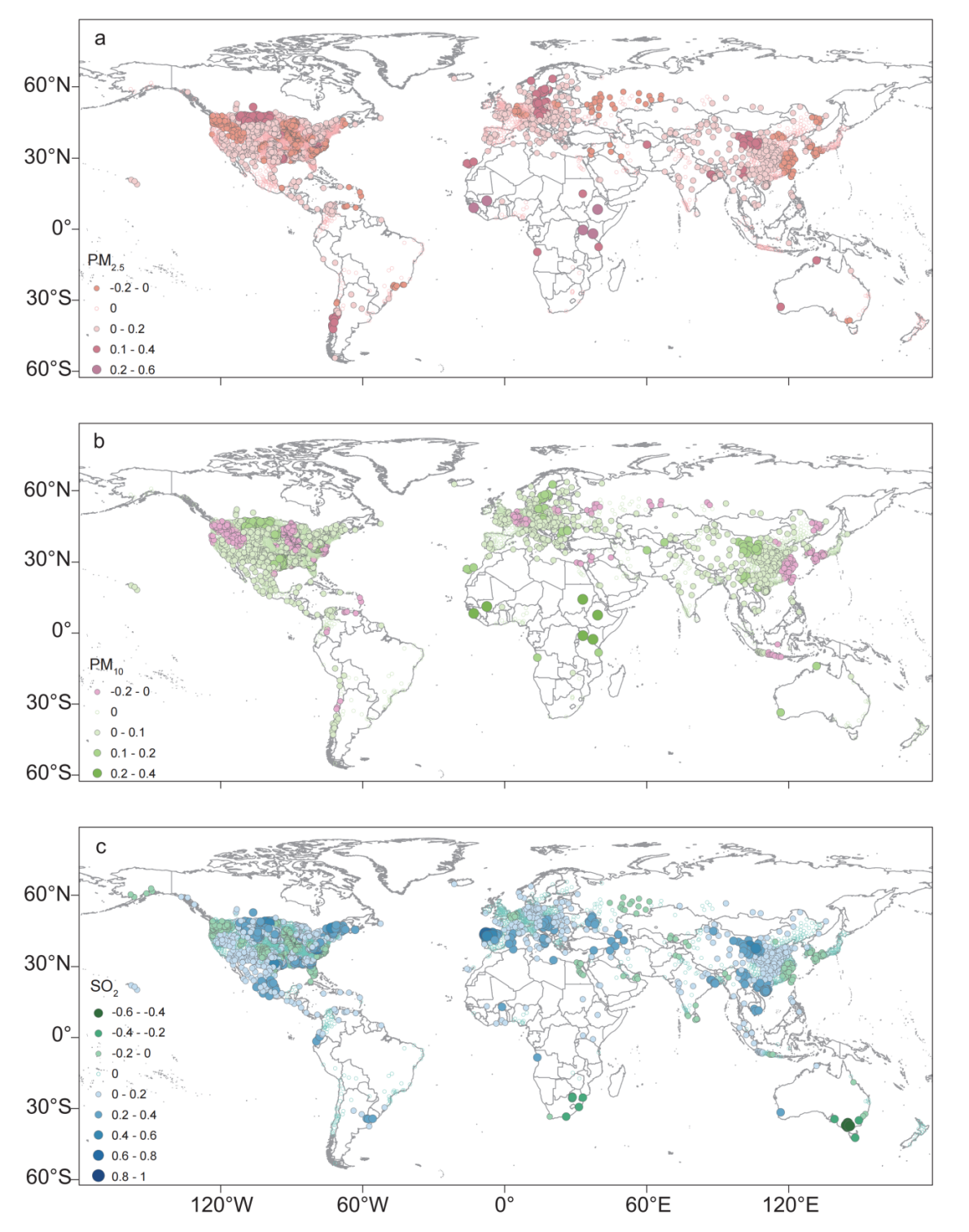
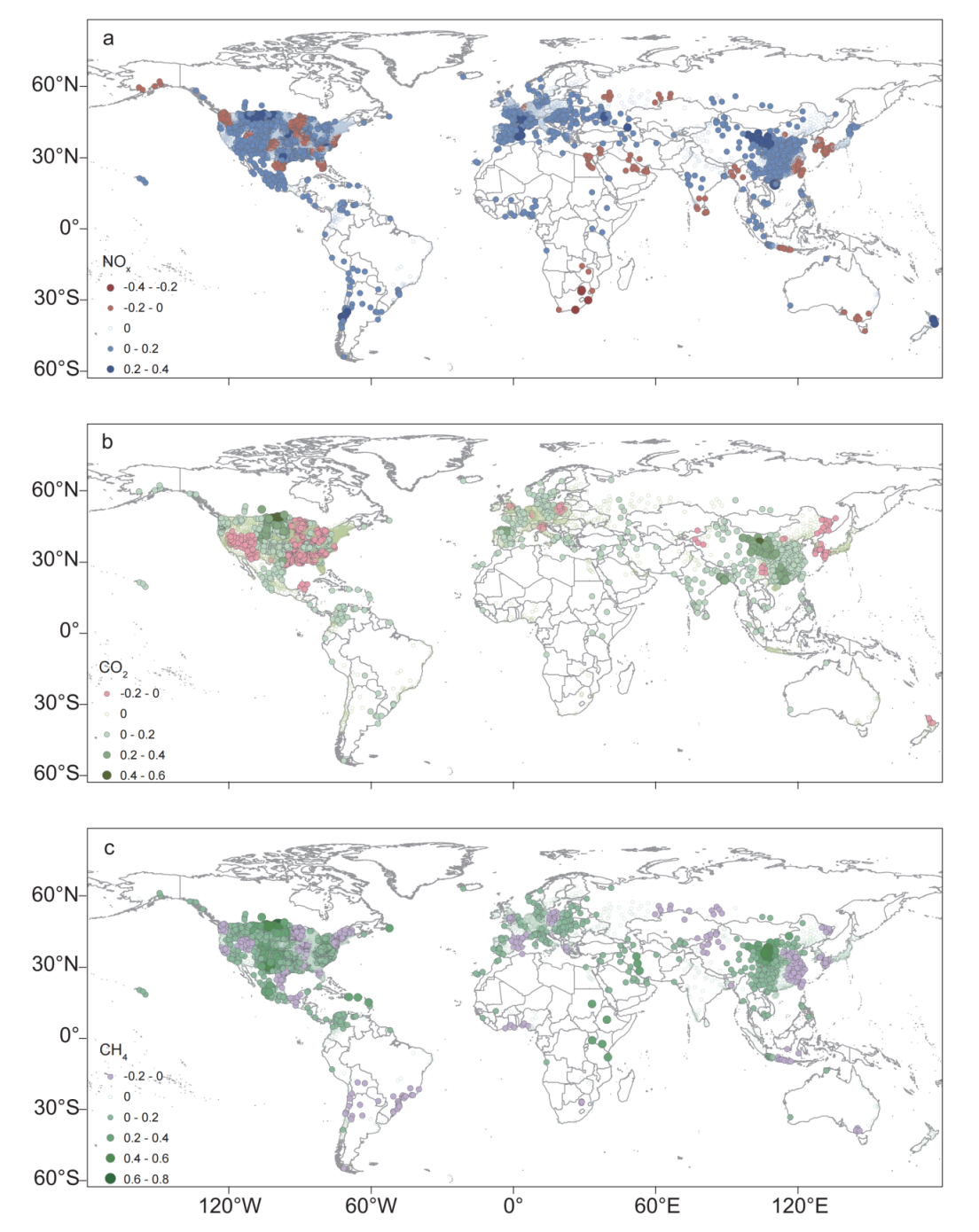
From a temporal perspective, the study found that the overall intensity of inter-city influences exhibits a declining trend. Approximately 75.66% of inter-city influence intensities decreased over time, while only about 21.31% showed an increasing trend. This suggests that global cities may be progressively strengthening their self-regulatory capacity in pursuing emission-related SDG targets. An increasing number of cities are advancing sustainable development through localized environmental governance, industrial restructuring, and autonomous emission reduction measures, thereby developing greater resilience and resistance when facing external shocks or negative environmental impacts from neighboring cities.
When cities were classified by different development stages, the study found that relatively less developed cities are more susceptible to cross-city influences from other cities. Cities with higher development levels typically possess more comprehensive local governance systems, more mature environmental regulatory frameworks, and more resilient infrastructure systems. These factors can buffer, absorb, or internalize external environmental impacts to some extent, thereby weakening spatial spillover effects from other cities. In contrast, cities with relatively lower development levels are typically more deeply embedded in global and regional production networks, with industrial sectors still in rapid expansion phases and greater dependence on cross-city resource flows, industrial collaboration, and external economic linkages. This stronger economic connectivity and regional dependence may further amplify inter-city interactions and environmental impact transmission.
By constructing five interaction scenarios—including a baseline scenario, an independent governance scenario, a collaborative optimization scenario, a deep cooperation scenario, and a non-cooperative scenario—the study simulated SDG performance changes under different inter-city interaction conditions. Results demonstrate that compared to independent governance scenario where each city "fights alone," inter-city collaborative cooperation can improve overall SDG performance by 10.81%. Emission governance is no longer merely a local affair for individual cities, but a global issue requiring cross-regional, inter-city coordinated advancement. The study further emphasizes that given the increasingly severe challenges of global climate change and air pollution, strengthening inter-city collaborative governance and promoting regionally coordinated emission reduction are of great significance for enhancing global urban sustainability.
This research is part of the UNESCO International Decade of Sciences for Sustainable Development (IDSSD, 2024–2033) and contributes to the Seamless Prediction and Services for Sustainable Natural and Built Environment (SEPRESS) Program (2025–2032). All co-authors at the Hong Kong University of Science and Technology acknowledge the support of the Otto Poon Centre for Climate Resilience and Sustainability at HKUST.